Thursday, February 3, 2011

The Stupidity of Wasteful Packaging Keeps Reaching New Depths

The Stupidity of Wasteful Packaging Keeps Reaching New Depths:
"This is how they sent a single order for CMOS batteries. So yes, it's an improvement.. although sending 65 screws in 65 padded envelopes inside a single box seems even more stupid than sending all those separates box. Didn't the guy packing that thought that maybe it would be better to use one single envelope? I really want to meet the people taking these decisions."

The Stupidity of Wasteful Packaging Keeps Reaching New Depths


From The Daily WTF

What is a fair price for Internet service? - The Globe and Mail

What is a fair price for Internet service? - The Globe and Mail:
"Assuming an inflated cost of 10 cents per gigabyte, it means that Bell, Shaw and Rogers are charging consumers between 10 and 50 times what it costs them to deliver data. This on top of their regular monthly Internet pricing! While I agree that heavy users should be prepared to pay more once they have reached their bandwidth caps, a fair price would be much closer to 10 cents per GB than the inflated $1-to-$5-per-gigabyte charge sanctioned by the CRTC.

The vast mark-up granted to cable and telecommunications under UBB by the CRTC demonstrates that the federal regulator has failed to deliver a competitive Internet services business in Canada. Rather than ensuring consumers receive fair Internet pricing, the CRTC seems content to line the pockets of Cable and telecommunications companies by forcing Canadian consumers to pay Internet data rates that have no basis in reality."

Maybe Harper and Clement's recent public association with this issue will shame the CRTC into doing its job: regulating the communications industry to the benefit of all of Canada.

Wednesday, February 2, 2011

Google just killed all the Marketplace hacks | The Digital Reader

Google just killed all the Marketplace hacks | The Digital Reader:
"This is one of the not quite so noticeable changes Google made today: they opened the Android Market – to everyone, no matter whether you have an authorized device. Google have loosened their grip on Android. (This development is particularly delicious considering that it comes only days after Apple tightened their grip on iOS.)"

Random House of Canada signed with Overdrive | The Digital Reader

Random House of Canada signed with Overdrive | The Digital Reader:
"Random House and Overdrive announced a new distribution agreement today. In the near future, participating libraries in Canada will be able to buy and loan ebooks published by Random House of Canada.
Um, why are we just now seeing this announcement in 2011? It’s hard to believe that this one of the big 6 publishers, and it took them this long to get their ebooks into libraries."

Harper steps into Web dispute - election coming?

Harper steps into Web dispute - The Globe and Mail:
"Prime Minister Stephen Harper is taking the unusual step of intervening in an ever mounting controversy over Internet billing.

Mr. Harper on Tuesday put more heft behind Industry Minister Tony Clement’s decision to launch a probe of a regulatory decision that raises the cost of Internet service, announcing he, too, is second-guessing the ruling."

The government needs to put Canada back in the game. The more Bell and Rogers profit from controlling the internet the more likely that Canada will lose the ability to participate in the worldwide information economy.
Of course it may just be some attention grabbing in anticipation of the upcoming election. "Harper cares about the Canada's future."

The beginning of the end for iBooks

5 reasons Apple’s touch App Store approach is the beginning of the end for iBooks - Book Bee
With Apple’s iBooks offering still struggling, and getting smashed by Amazon on catalogue range (even more so if you live outside the US) and probably sales, on one level it would make commercial sense for Apple to start trying to drive ebook purchases through iTunes. Otherwise others profit from the strength of Apple’s ecosystem, without Apple getting a cut.

But when looking at the “big picture” enforcing this is a ridiculously bad idea for the following reasons:

A.Apple paints itself as the big, bad corporation, and gets in a fight with everyone. It’s already a PR disaster.
B.The more they enforce their rules, the more they remind everyone that they are running a very closed ecosystem that can change on a dime, and the more they drive people to Android.
From Jason Davis’s Book Bee blog.

I don't see Apple backing off in any significant way (ie that will impact their short term revenue model). Apple is collapsing under the weight of its own bureaucracy.

Tuesday, February 1, 2011

Are ebooks heralding the end of ownership? | Good E-Reader Blog - Electronic Reader and Tablet PC News

Are ebooks heralding the end of ownership? | Good E-Reader Blog - Electronic Reader and Tablet PC News:
"Tim Spalding, creator of Librarything thinks that all of this will devalue books in general. “The process is gradual. Mental models change slower than technology. If the Kindle had debuted with an access-based ‘faucet’ model, it would have failed. Consumers would not have traded true ownership for a tethered, metered and monitored product. But we’ll get there soon enough, as each step away from ownership makes the next step more acceptable. Once you realise your Kindle book is not fully yours, you’ll accept it being mostly not yours. Google Ebooks are a further step away from ownership. Eventually you get to a faucet model, as music has done, either low-price (Netflix) or free (Pandora, YouTube)."

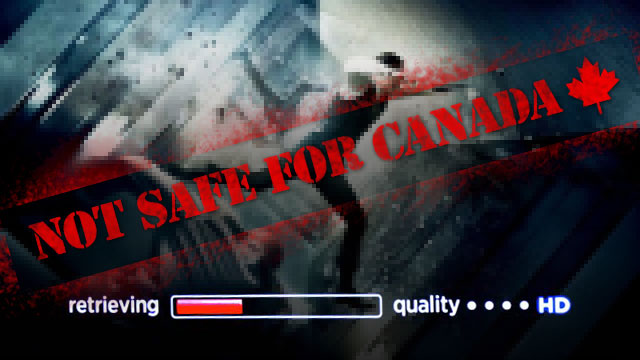
Do large downloads need "Not Safe for Canada" badge?

Do large downloads need "Not Safe for Canada" badge?:
"New Usage-Based Billing (UBB) rules in Canada mean that indie ISPs are already slashing data caps from 200GB per month down to a mere 25GB. In response, Reddit users suggested a 'Not Safe for Canada' badge that warns Canadian Internet users away from all large files. For those with small caps, this isn't a bad idea—and we asked our creative director Aurich to mock one up."

Are Publishers Liable For Lost eBooks If Borders Dissolves? | The Digital Reader

Are Publishers Liable For Lost eBooks If Borders Dissolves? | The Digital Reader:
"I am not a lawyer, but it seems to me those of the Big 6 publishers who have been playing the price-fixing Agency Model racket have left themselves wide open for class-action lawsuits if their “agents” go out of business and lose the eBooks of their customers."

Michael Geist - Unpacking The Policy Issues Behind Bandwidth Caps & Usage Based Billing

Michael Geist - Unpacking The Policy Issues Behind Bandwidth Caps & Usage Based Billing:
"Yet despite the obvious anger over the issue, there remains a considerable amount of misinformation about what has happened and uncertainty about just what to do about it. This post attempts to unpack the issue, by discussing two related but not identical concerns - the recent CRTC UBB decision and the broader use of bandwidth caps by virtually all large Canadian ISPs."